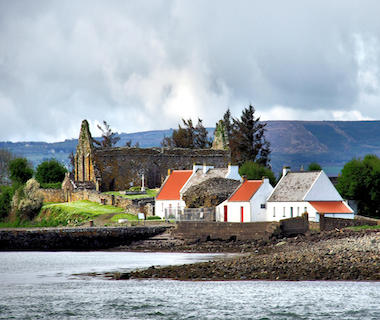

Scattery Island, or Inis Cathaigh, lies serenely in the Shannon Estuary off the Clare coast, just a short boat journey from Kilrush Marina. It is best known today as a sacred monastic site steeped in legend, early Christian faith, and layered with centuries of history.
The origins of the island’s spiritual heritage trace back to the 6th century, when St. Senan founded a monastic community there. Over time, this settlement became one of Ireland’s most remarkable early Christian sites, with stone churches, a soaring round tower, cloister-ruins and ecclesiastical structures marking its landscape. Visitors today can still see the cathedral and several medieval churches, enveloped in quiet and contemplation.The island’s story extends beyond monastic life. It hosts a restored village known as “The Street”, once home to pilots who guided vessels through the estuary’s shifting tides. On the southern headland stands a lighthouse and an artillery battery, relics of later strategic importance, reflecting Scattery’s changing role over the centuries. Nature also plays a defining role: grassy expanses, birdlife, coastal vistas, and the clean estuarine waters around the island bring a quiet vitality to the place.
Today, managed by the Office of Public Works, Scattery Island is a National Monument in State care, its care entrusted for conservation and thoughtful visitor experience. Visitors begin their journey at Kilrush Marina, crossing through lock gates and sailing past Cappa and Hog Island until the island’s silhouette—its round tower and rooftops—comes into view. On arrival, guided walking tours led by OPW staff bring alive tales of monastic devotion, legendary battles, community life, and eventual depopulation. An audio-tour can extend exploration to the perimeter path circling the island, offering panoramic views of Clare, Kerry and the Estuary.
Scattery Island thus stands as a place where history, faith and nature intertwine—a quiet isle that invites reflection, discovery and a deeper sense of connection to Ireland’s ancient past.